This Is Not a Trekking Tour
If you're after a fitness challenge, a resort weekend, or a checklist of viewpoints, this isn't built for you. This is a slow, deliberate retracing of the real ground behind Kenneth Anderson's jungle stories — the Melagiri hills of the Tamil Nadu–Karnataka border, where roughly twenty of his fifty-seven published tales are set. We go by private vehicle, in a group capped at four, and we stop long enough at each place to actually stand there and tell the story properly — not just photograph a sign.
Every stop below is a real, verifiable location — cross-checked against Anderson's own published geography and the accounts of the readers who've spent decades tracing his footsteps before us. Where the record is certain, we say so. Where it's informed belief rather than fact, we say that too.
The Sangam Panther
Where the Cauvery meets the Arkavathi, about 100 km southwest of Bangalore via Kanakapura — a quiet confluence that was, in Anderson's telling, anything but quiet. A man-eating panther was active along this exact stretch of riverbank, and his own account of the hunt's end reads, in his words, as "hair-raising." We stand at the rocky point where the two rivers actually meet — the same topography he'd have used to read the ground for pug-marks along the mud banks.
The Black Panther of Sivanipalli
A small hamlet near Denkanikottai that Anderson called his favourite weekend haunt, long before it became famous. In 1934, a herdsman watched a jet-black panther drink at the village waterhole in broad daylight — an animal so rarely seen that its presence alone was treated as an omen. Black leopards are a genuine colour-morph, not a separate species, and India records far more of them than Africa ever has — but a village waterhole in daylight was, and still is, an exceptional sighting. Anderson's own writing maps the ground precisely: fire-lines cut by the Forestry Department ring the hamlet on all four sides, converging near a waterhole at the south-eastern corner, with a second, smaller pool hidden deeper in the jungle. Heavy bamboo crowds the water; sandalwood and thinner scrub take over to the north and east.
The Forest That Never Emptied Out
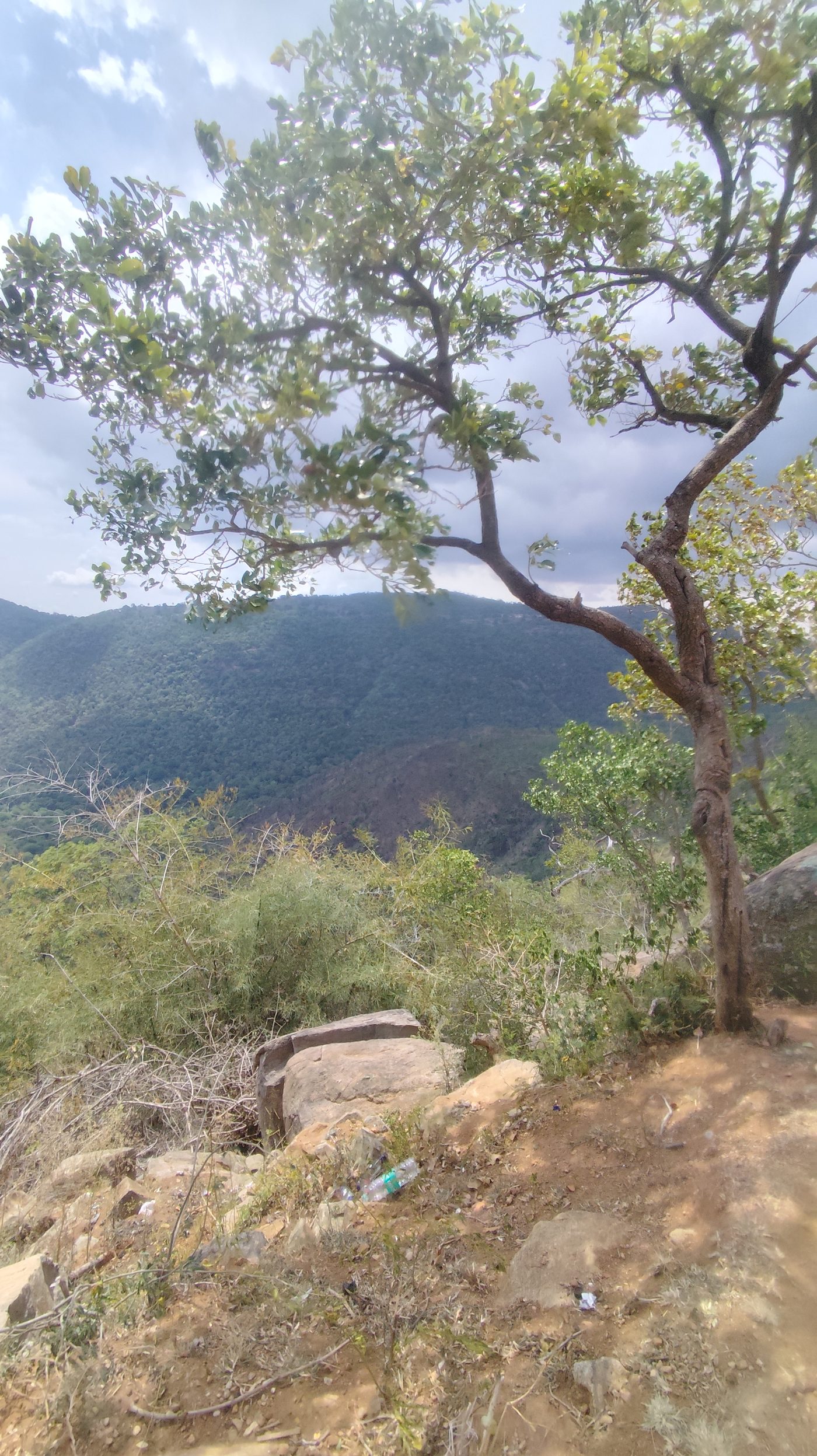
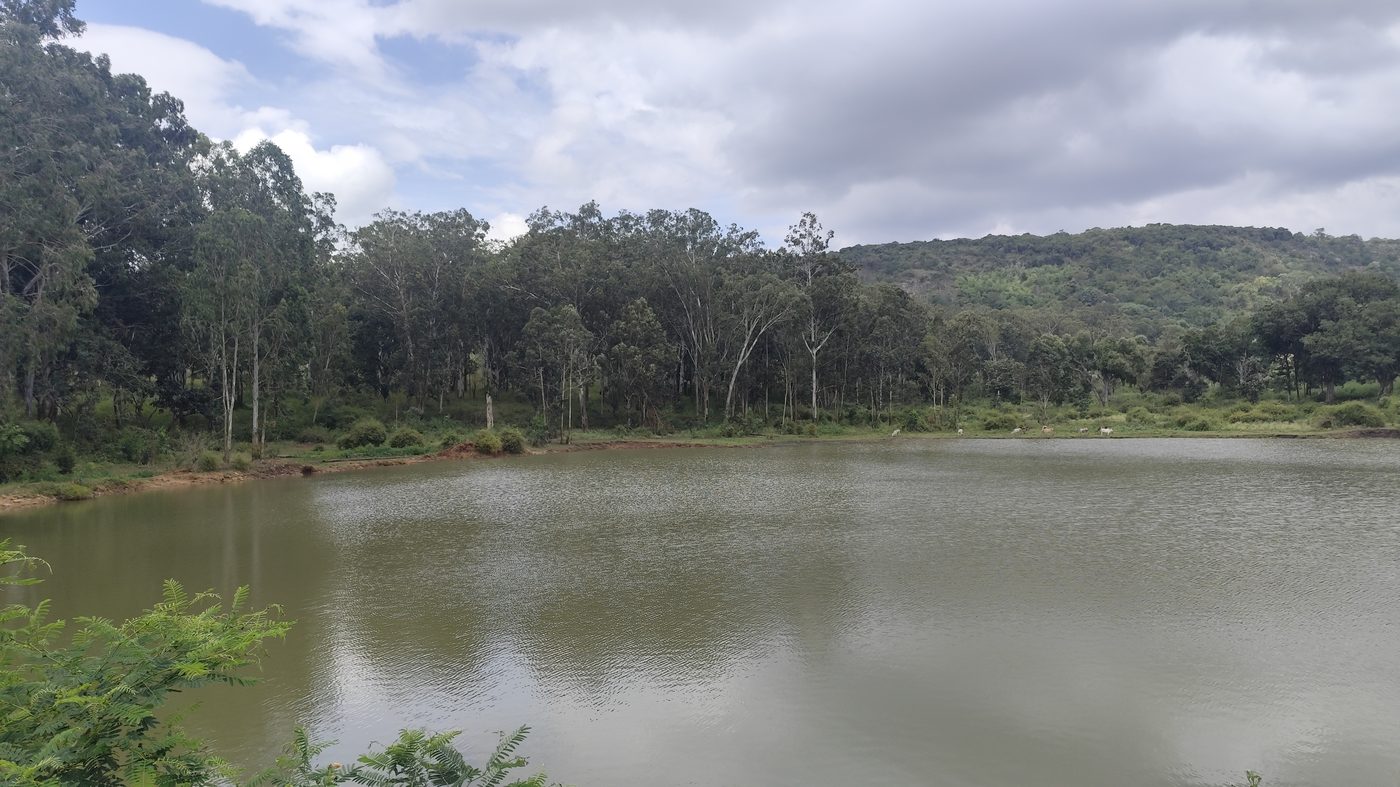
Aiyur isn't the subject of one single chapter — it's the geography Anderson describes moving through between stories, a forest bungalow set roughly five hundred feet up a hillside, four and a half miles east of Sivanipalli. Today it's run by the Tamil Nadu Forest Department as an eco-tourism stay, and it's where we spend the night — bamboo cottages, a campfire, and if the timing's right, a watchtower over Sami Eri lake for elephants coming down to drink at dusk.
This part of Melagiri has always been elephant country, and it still is. The forest track behind the guest house regularly turns up fresh dung and cracked bamboo well before any vehicle has passed — sign of a herd still moving through on its own schedule, most likely overnight or at first light, along corridors that haven't changed much since Anderson's own notes on the region.
After dinner, the evening turns quieter. We read a small number of personal stories from someone who grew up alongside Don Anderson himself — not published work, not part of the official record, just firsthand memory carried by someone who was there, in the tradition Ken and Don wrote in. It's shared privately, around the fire, exactly as it was meant to be heard.
The Man-Eater of Jowlagiri
Anderson called Anchetty the capital of his activity in this region, and the record backs him up — it's the staging ground for more of his stories than anywhere else on this route. By the time he was called in on the Jowlagiri tigress, fifteen people had already been killed. He moved camp to a river site 23 miles south, tied buffalo baits along three separate paths — one by the river, one on the trail toward Anchetty itself, one at a watershed — and waited. When it was finally over, the tigress was carried the seven miles back to Jowlagiri on foot, and from there, home to Bangalore, lashed across the back seat of his own two-seater Studebaker.
The Rogue Elephant of Panapatti
A young bull elephant, beaten and driven out by the dominant male of his own herd, wandered the Panapatti area alone, carrying one whole tusk and one snapped half-tusk — the physical scar of the fight that made him a rogue in the first place. He turned on a hunter's camp who'd come looking for him, and the government doubled the bounty on his head. Anderson tracked him for four days before the kill was finally made where a forest stream runs down to join the Cauvery.
Where the Cauvery Breaks Open
We close the loop where the Cauvery drops over some of the oldest rock in South Asia, throwing up enough spray to earn its name — "Hoge" for smoke, "Kal" for rock, in Kannada. It isn't tied to one Anderson chapter the way the other stops are, but it's the natural, dramatic endpoint of the same river system his stories run along, and as good a place as any to end two days spent listening for it.
What's Included
- Private door-to-door transport from Bangalore, or Metro station pickup
- Overnight stay at Aiyur Forest Guest House, twin-sharing
- All meals — picked up fresh from local eateries along the route, not resort catering
- Forest entry tariffs and permit clearance
- A host who knows this specific stretch of Melagiri firsthand, not from a briefing document
Good to Know
- This route runs almost entirely along the real Bangalore–Denkanikottai–Anchetty–Hogenakkal road — a genuine, drivable corridor, not a series of disconnected detours
- The stretch past Anchetty narrows to a single lane with a rough patch of a few kilometers — part of the experience, not a hazard to hide
- Group size is capped at four, by design — this isn't built to scale
- A valid photo ID (passport is fine) is required for forest checkpost verification
What to Bring
- A small backpack — this is a light-packing trip
- Government-issued photo ID
- Your own copy of an Anderson omnibus, if you have one, for the evening reading circle at Aiyur
Join the Community
Whether or not you join a departure, there's a worldwide WhatsApp community for readers of Kenneth Anderson — his jungles, his stories, and the people who lived them. Open to anyone, anywhere.
Join the WhatsApp Community